

6 Tricks to Make your Home Feel Bigger and Brighter using Glass
This is a collaborative post
Boosting natural light levels throughout a living space is one of the most important assignments for interior designers. Not only can this help to reduce energy bills and improve your mood, but it can also make living spaces feel larger, lighter, and more inviting.
Who wouldn’t want to feel happier and healthier and enjoy an airy atmosphere in every room?
While you may be limited in the architectural adjustments you can make, there’s one star material that can be used in several ways to transform a dull and restricted space.
Implementing glass features throughout your home is a total gamechanger when it comes to redistributing light and levelling up your interior layout.
With so many different glass products available from specialist suppliers like The Glass Warehouse, who manufacture glass cut to size that’s customised to suit your needs, it couldn’t be easier to improve your home by incorporating personalised glass elements.
If you need some inspiration for brightening solutions to make your interiors feel grander, here are six tips and tricks you can use to change them from looking cramped to feeling expansive.
1) Create a glass ceiling with a skylight
Though it requires more structural work and depends on the layout of your property, installing a skylight in an otherwise solid ceiling can drastically improve light levels.
Fitting a skylight typically works best for single-storey extensions or attic conversions. A partial glass ceiling can instantly uplift a dining room, lounge, or bedroom, as it not only brings more light in, but also makes the space feel larger due to the view of the open sky above.
A bolder move is to use walk-on glass to create an interior skylight, allowing light to pass from an upper level to a lower level, such as a basement with no windows.
In cases where privacy is a concern, you can opt for frosted glass to obscure views without sacrificing light transmission, so you’ll still benefit from brighter spaces.
2) Upgrade to a glass staircase
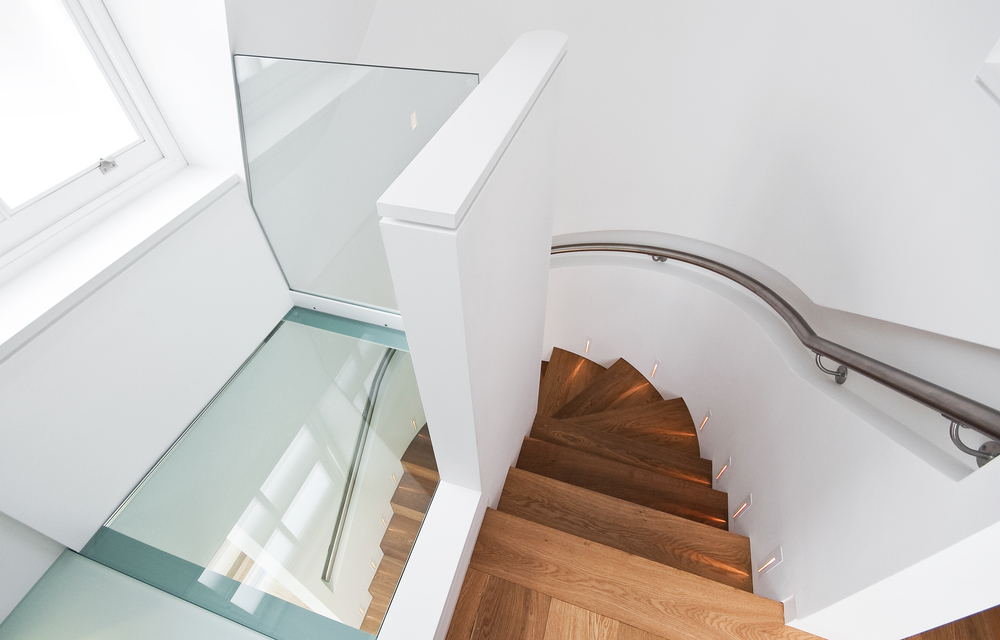
As a key structural feature that connects different levels of the home, opening up the staircase can drastically improve the movement of light between these areas.
The easiest way to do this is by switching wooden spindles or solid balustrades for glass panels. Whether you use a frameless run of glass with minimal fixings or framed glass with metal posts, glass balustrades can help narrow stairways feel far more spacious.
While replacing spindles and bannisters with glass is a relatively simple refurbishment, if you’re completely replacing an old staircase, you could take a chance on actual glass stairs.
Using walk-on glass for the treads will let light spread more effectively from above and below, while creating a cool ‘floating’ effect no matter how you support the treads.
3) Swap solid doors for glass doors
If adding external windows isn’t possible, why not create some internal ones by including doors with windows? This will help to spread light between rooms and hallways.
Whether it’s a single-panel door or a French door with multiple smaller panes in a frame, a glass door can stop a smaller room from feeling dim and enclosed by increasing the amount of light. Without a dark solid door blocking off the entrance, the space will feel more open.
Glass sliding doors also offer a space-saving option that can make a room feel larger, as they don’t require the clearance to swing open and closed (which is useful for patio doors, too).
Again, if you wouldn’t be comfortable with clear glass, there are various finishes like tinted or satin glass that still allow light through while providing a greater level of visual privacy.
4) Position mirrors strategically
One of the oldest tricks in the interior design catalogue is using glass mirrors to bounce light around the whole room and create the visual illusion of a larger space.
Mirrors fool the eye into thinking the area is bigger than it actually is by reflecting the space back to itself. This is why it’s a good idea to place a mirror at the end of a narrow hallway or opposite a window, so the reflected view seems more spacious and welcoming.
You can install mirrors in pretty much any room, whether wall-mounted or freestanding. The larger the mirror, or the more mirrored surfaces there are, the brighter the room will be.
Not only can you choose different forms, like mirrored kitchen splashbacks or mirror walls, but you can also choose different finishes, such as bronze tinted glass for a warmer glow.
5) Use glass screens in bathrooms
Bathrooms are usually the smallest rooms in any home, even if you’re lucky enough to have multiple, which is why replacing shower curtains in them is even more important.
A billowy plastic shower curtain can take up a lot of space physically and visually, as well as being impractical when actually using the shower. The smart solution is to install a sleek glass bath screen or modern glass shower screen instead.
If you have a bath, you can get a custom-fit partial screen to go along the bath edge, or if you have a walk-in shower, you could install frameless glass screens with a glass door.
Whether fixed or hinged, clear glass bathroom screens allow the room to feel more open without blocking off the bathing area – and they’re available in other finishes, too.
6) Install glass walls or partitions
Sometimes, especially with open floor plans, you may want to break interior spaces up into smaller areas for different uses – but then there’s the risk of them feeling too small.
Fortunately, floor-to-ceiling glass partitions can divide spaces neatly without obstructing light, so the individual spaces won’t feel dingy and claustrophobic. You could even create a glass room with its own door within a larger room – an ideal solution for studio apartments.
With a smaller footprint, glass partitions and glass walls also require less time and effort to install and are more easily adjustable than solid walls or bulky furniture.
You can opt for different styles of glass or even apply patterned films to suit your privacy and décor preferences, depending on how each space will be used.
However you decide to implement glass throughout your home, it’s guaranteed to make its surroundings look brighter and feel bigger than before.


